

SatVu launches HotSat-3 to double thermal imaging capacity
Tue, 13th Oct 2026 (Today).webp)
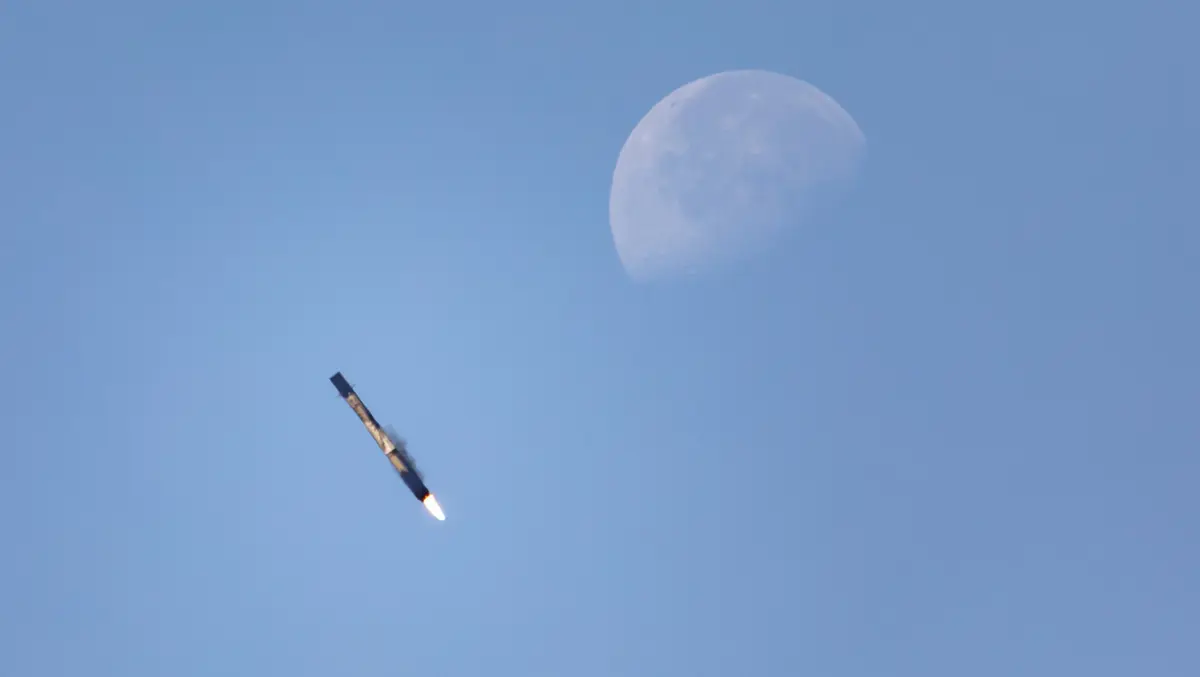
SatVu has launched its HotSat-3 thermal imaging satellite on a SpaceX rideshare mission. It is the British company's third mid-wave infrared spacecraft.
Once commissioned, HotSat-3 will operate alongside HotSat-2, doubling SatVu's collection capacity. That will allow the company to gather high-resolution thermal imagery anywhere on Earth every 24 hours, day and night.
The launch expands a constellation aimed at customers in Defence & Intelligence, Economic Intelligence, and Climate Resilience. The additional capacity will also increase revisit rates over the same locations, allowing users to build time series from repeated observations.
Those time series are intended to show changes in operational activity at assets and infrastructure. Thermal imagery can indicate whether an asset or component is active or idle, and where activity is taking place.
What It Sees
SatVu said its data can identify heat sources including vehicle and vessel engines, generators, gas flares, petrochemical plant components, pipes, rail cars, data centres, maritime vessel wakes, power plant cooling effluent plumes, heavy industry facility components, urban heat variations, and industrial heat pollution.
Repeated observations can reveal status, intensity, and change over time. At energy facilities such as refineries and LNG plants, this can help analysts identify production shifts, shutdowns, restarts, and maintenance through heat signatures at the asset and sub-component level.
For Defence & Intelligence users, the same approach provides an additional source of data for assessing activity at strategic sites and critical infrastructure. It can be especially useful at night and in places where information from the ground is limited or delayed.
Anthony Baker, Chief Executive Officer and Co-Founder of SatVu, outlined the commercial significance of adding a second operational satellite.
"HotSat-3 is where the constellation optimises what we can deliver for customers. With two operational satellites, we will have double the capacity: customers can collect twice as much imagery, monitor twice as many sites, or return to the same site more often.
"Return to a site, day and night, and you can read its operational state by what is hot and what is not, what is on and what is off. Build those observations into a time series and you move beyond a snapshot to understanding how activity is changing. That is the operational heartbeat we are building SatVu to measure: status, intensity and change across the assets and infrastructure that matter to governments, markets and industry," Baker said.
Constellation Buildout
HotSat-3 follows HotSat-2, which began delivering high-resolution thermal intelligence in June 2026. With HotSat-3 now entering commissioning, SatVu is moving toward commercial operations for the new satellite.
Capacity on HotSat-2 and HotSat-3 is already heavily subscribed. SatVu has also secured launches for HotSat-4 and HotSat-5, which are in production, as it works to expand the constellation further.
The company focuses on thermal Earth observation, using mid-wave infrared sensing to detect heat signatures and activity patterns not directly measured by other commercial Earth observation sensors. Its imagery reaches resolutions of up to 3.5 metres.
This positions SatVu in a part of the satellite data market where customers want independent evidence of activity on the ground. The company's stated use cases range from monitoring critical infrastructure and industrial sites to tracking patterns in transport, energy, and urban environments.
HotSat-3 will now go through commissioning before entering commercial service. Baker said SatVu is building a system to measure "status, intensity and change across the assets and infrastructure that matter to governments, markets and industry".